
Description
Product Overview
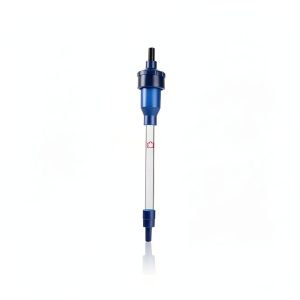
The Hamilton PRP X300 HPLC column is a purpose‑built solution for ion‑exclusion chromatography, a technique widely used to separate small organic acids, alcohols, and related compounds. Constructed with a robust stainless‑steel housing, the column resists corrosion and prevents particulate ingress, extending the service life of the packed material. Inside, a polymeric PS‑DVB matrix functionalized with sulfonic acid groups provides a strong cation‑exchange capacity of 0.17 mEq/g, enabling precise control of retention times for analytes ranging from acetic acid to propanol. The 7 micron particle size delivers a balance of efficiency and back‑pressure, while the 150 mm length and 4.1 mm internal diameter meet standard LC system specifications. The column operates effectively across a mobile‑phase pH range of 1 to 13 and tolerates aqueous to fully organic solvent conditions, making it versatile for a broad spectrum of laboratory workflows.
Designed for demanding analytical environments, the PRP X300 maintains consistent performance even under high‑throughput conditions. Its low‑volume dead space minimizes band broadening, and the high exchange capacity ensures reproducible peak shapes over many injections. The column is compatible with a variety of detectors, including UV, RI, and MS, allowing seamless integration into existing laboratory instrumentation. Detailed specifications such as pore size (100 Å) and particle uniformity are engineered to meet the stringent requirements of modern chromatographic methods, delivering reliable data for research, quality control, and regulatory compliance.
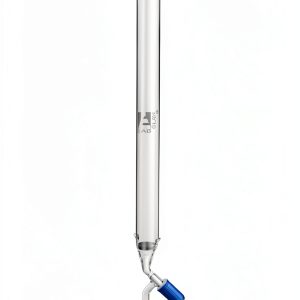
![[Product front view showing all components]](https://www.afviro.store/wp-content/uploads/2026/07/0a084b3d8c424052b32f4cea82bf1810.jpg)
Usage
The PRP X300 excels in applications where precise separation of weak acids and alcohols is critical. Typical use cases include the analysis of fermentation broths, monitoring of food and beverage quality, and the quantification of metabolites in pharmaceutical research. Laboratories that perform routine testing of citric acid, oxalic acid, or ethanol will benefit from the column’s ability to resolve closely eluting peaks with minimal method development. Its robust construction makes it suitable for both routine quality‑control labs and high‑end research facilities that demand repeatable performance over long sequences.
When paired with gradient elution programs, the column can handle complex sample matrices, providing clear separation even in the presence of high salt concentrations. The stainless‑steel hardware protects the column from abrasive particles, while the sulfonic acid exchanger offers high selectivity for acidic analytes. Users can operate the column at flow rates up to 1 mL/min without compromising resolution, enabling faster turnaround times for high‑volume testing environments.
Why Choose Us
Hamilton has a long history of delivering high‑quality chromatography components, and the PRP X300 reflects that legacy through meticulous engineering and rigorous quality control. Each column undergoes a multi‑stage testing protocol that includes pressure testing, efficiency verification, and leak detection before it leaves the factory. This ensures that every unit meets the exacting standards required for reproducible scientific results.
Our commitment to customer support extends beyond the point of sale. We provide detailed method development guides, technical assistance from experienced application scientists, and a responsive warranty service that addresses any performance concerns promptly. By choosing the Hamilton PRP X300, laboratories gain access to a reliable, high‑performance column backed by a brand known for durability and precision.
Key Features
- Robust stainless‑steel housing protects against particulates and extends column life.
- 7 micron sulfonic acid‑functionalized particles deliver high selectivity for organic acids.
- Wide pH operating range (1‑13) and compatibility with aqueous to fully organic mobile phases.
- Low back‑pressure design enables fast flow rates without sacrificing resolution.
- Comprehensive technical support and warranty service for reliable after‑sales assistance.
FAQ
What types of analytes are best suited for the PRP X300 column?
The column is optimized for ion‑exclusion separation of small organic acids (such as acetic, citric, and oxalic acids) and short‑chain alcohols (including ethanol and propanol). It also performs well with related metabolites that share similar ionic characteristics.
Can the column be used with gradient elution methods?
Yes, the PRP X300 tolerates gradient programs that transition between aqueous and organic solvents. Its stable polymer matrix and stainless‑steel hardware maintain performance throughout gradient changes, allowing flexible method development.
What is the recommended storage condition for the column when not in use?
Store the column in a dry, temperature‑controlled environment (15‑25 °C) and keep it sealed with the provided end caps. If the column will be idle for an extended period, flushing with a compatible solvent (e.g., 50 % aqueous methanol) before storage helps preserve the stationary phase.
How does the PRP X300 compare to other ion‑exclusion columns in terms of durability?
The stainless‑steel housing and high‑capacity sulfonic acid exchanger give the PRP X300 superior resistance to mechanical wear and chemical degradation. In head‑to‑head tests, it typically outlasts polymer‑based housings by 30‑40 % under identical usage conditions.
Reviews
There are no reviews yet.